
A cleaner unit uses less power
When filters and coils are clean, your air conditioner doesn't have to work as hard — which can mean lower running costs.
Clogged filters restrict airflow
A dirty filter can make the system work harder to pull air through.
Dirty coils hold heat
Build-up on the coil can slow heat exchange and reduce cooling performance.
Longer run times
A unit that struggles can run longer to reach the same temperature.
Clean vs dirty: what it can cost to run
| Condition | Effect |
|---|---|
| Clean air filters | Can reduce energy use by 5–15% |
| Dirty or clogged filters | Restrict airflow and reduce efficiency |
| Clean evaporator and condenser coils | Improve heat transfer and performance |
| Dirty condenser coils | Can significantly increase compressor energy use |
Sources: Daikin Australia; CHOICE (2025); Australian Government, HVAC HESS, The Importance of Cleaning Coils (2013). Actual energy use and savings vary with equipment, condition and operating environment.
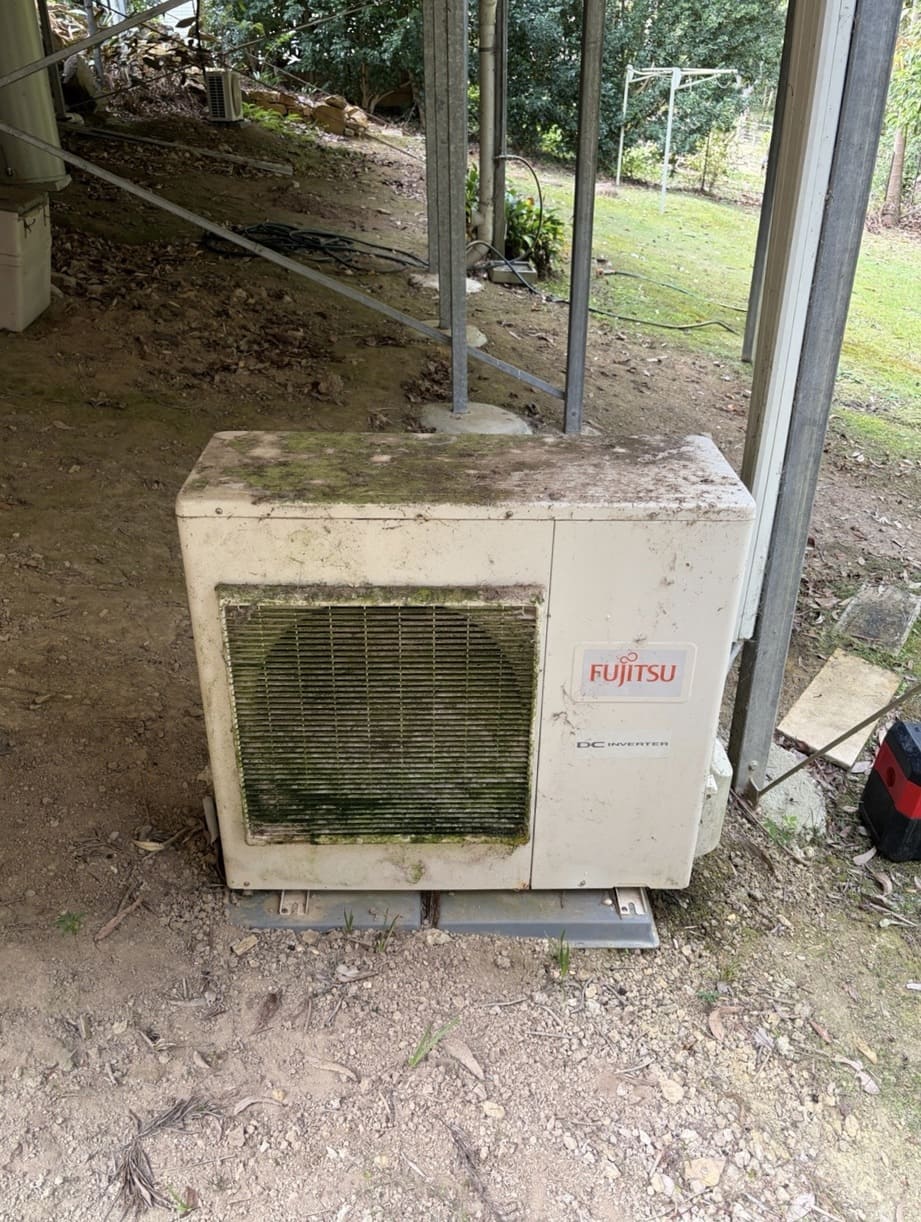
How the condition of your air conditioner's filters and coils can affect its energy use. A clean system can run more freely — a dirty one often has to work harder to cool the same space.
What it can mean on your bill
On a $200 summer bill, a clean filter could save up to $18 a month — one of the easiest ways to help your unit run more efficiently.
Example only — based on the 5–15% filter figure. Actual savings vary by system, usage and electricity rate.
Longer run times
A dirty unit may run a 25-minute cycle where a clean one needs about 15 minutes to reach the same temperature — and those extra minutes can add up over a long summer.
May run longer to reach the same temperature.
Can reach the same temperature sooner.
Frequently Asked Questions
Quick answers about energy savings from a clean air conditioner.